According to Merriam-Webster’s dictionary, dismissive means “serving to dismiss or reject someone or something regarded as unworthy of serious attention”.
Have you ever been treated dismissively? Have you ever dismissed anyone else? Is being dismissive always hindering, or can it be helpful, too?
Those are the kinds of questions we will be working through today, as we ask, “What does dismissive mean?” and attempt to find some answers.
Please note: dismissiveness is largely subjective; the context and frequency of perceived dismissiveness can affect what you view as dismissive.
Examples of Dismissive Behavior
Dismissive behavior can take many forms, including through your actions, body language, and facial expressions. Sometimes, the best way to explain this kind of behavior is to give practical examples.
Imagine a scenario where you walk into a meeting area, look around, and see a mixture of people you know and do not know. As you survey the room for a bit, you notice some acquaintances talking together on the far side of the room.
At first, you start moving toward them; then you realize that, because there are so many other people in the room, your path is blocked. You politely say, “Excuse me.” And wait for them to let you pass.
No one moves. You try to make eye contact with someone in this group to let them know you want to walk further into the room towards the people you know, only to have the person whose attention you are seeking look away. Exactly why, you don’t know.
After an awkward pause, you see a physical opening and walk on, zig-zagging through the crowd, eventually reaching the acquaintances you wanted to connect with in the first place. As you say hello, everyone stops talking. No one greets you.
Has this kind of thing ever happened to you? This example demonstrates multiple dismissive acts – some intentional, some unintentional.
Additional ways people can act dismissively include:
- ignoring your attempts to join a conversation,
- constantly invalidating your responses,
- consistently brushing off your concerns,
- frequently responding to your comments with short, vague answers, or
- beginning a conversation with someone else in the middle of a conversation you were having with them.

Common Expressions of Dismissive People
If you are being dismissive, you are likely to use certain phrases, body language, and facial expressions. To begin, you may use some of the following verbal cues when being dismissive:
- “Whatever.”
- “You’re overreacting.”
- “It’s not worth discussing.”
- “You’re imagining things.”
Additionally, body language can also clue you in to dismissive behavior. You can see this in the following ways:
- Crossed arms;
- Heavy sighs;
- Tapping fingers; and
- Turning away.
Finally, you can use facial expressions to show that you are being dismissive. Some of those include:
- Rolling your eyes;
- Shrugging your shoulders;
- Raising your eyebrows, and
- Smirking.
Reasons for Dismissive Behavior
So where does this behavior come from? There are several reasons why you or others may be dismissive…
The first of those is your childhood experiences. Being dismissive can come from copying the behavior of the adults you grew up with. This behavior may also stem from trauma or abuse, such that being dismissive is a coping mechanism.
Another potential trigger for dismissive behavior is feelings of insecurity. If you have low self-esteem, you might use dismissiveness as a mask to prevent yourself from getting hurt.
Additionally, you might be completely unaware that you are being dismissive. This could happen if you have difficulty reading social cues or have intuitively grown up responding to people dismissively – you don’t know what you don’t know!
Finally, dismissiveness can stem from a desire to control people and situations: you might use it as a power play that helps you feel superior to others. If that is the case, you might struggle to feel good about yourself unless you tear down others.
Being Dismissive: The Good and the Bad
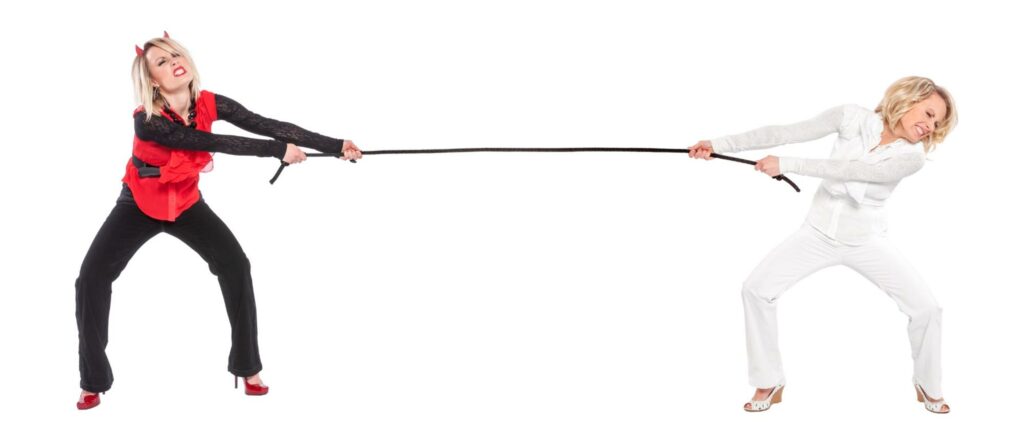
If you asked most people whether being dismissive was a healthy or unhealthy attribute, many would likely say that it was unhealthy. Even so, is that always the case?
In this section, we are going to look at potential weaknesses and strengths associated with being dismissive.
Before we do, please remember: dismissiveness is experienced subjectively; context and frequency can affect what you view as dismissive.
5 Weaknesses Associated with Dismissiveness
Since people are more inclined to think that being dismissive is an unattractive character trait or behavior, we will address this side first. Some anti-social expressions of dismissiveness include:
- Lack of empathy for others’ viewpoints and experiences.
- Arrogance and an air of superiority.
- Closed-mindedness – especially in actively rejecting new or different ideas.
- Difficulty compromising with others (which can affect your relationships with them).
- Emotional abuse in the form of neglect (perhaps because you have experienced this yourself).
5 Ways Dismissiveness Can be a Strength
Believe it or not, there are some contexts in which dismissiveness can be a strength worth celebrating and cultivating. Some of those include:
- Overall confidence in your abilities and decision-making (empowering you to be competent and not letting criticism paralyze you).
- An ability to focus on the most important/key details while glossing over insignificant minutiae.
- Assertiveness: the ability to stand up for yourself (especially when being threatened by a bully).
- Independence: being able to make decisions without needing to rely on others (especially compared to codependence).
- Choosing logic over emotion when making decisions (this is analogous to emotional regulation).
Long-term Effects of Experiencing Others’ Dismissiveness
Repeatedly being dismissed can have long-lasting effects on your mental health and overall emotional wellbeing. It can lead to some of the following consequences in your personal life and relationships:
- Deteriorating communication;
- Relationship strain from feeling undervalued;
- Worsening mental health, potentially in the form of depression and anxiety;
- Increasing self-harm as a result of lower self-worth; and
- Withdrawing from social and personal interactions.

How to Handle Dismissiveness
In this section, we will consider how to approach dismissiveness from two perspectives. The first is from the standpoint of others being dismissive toward you. The second will address you being dismissive of others.
Some of the ways you can handle others being dismissive towards you include:
- Bringing it to their attention. They may not know that how they are treating you is problematic. Verbalizing your experience can help others understand the consequences of their actions.
- Sharing how you feel. Taking ownership of your emotions can build self-confidence and healthy boundary-setting abilities.
- Asserting yourself. Building assertiveness can strengthen your relationships and help with your overall communication.
- Setting boundaries. An unspoken boundary is impossible for others to honor. If you communicate a boundary clearly, then follow through with consequences, that can help to show whether someone is intentionally being dismissive towards you or is acting in ignorance.
And here are some ways to shift yourself away from being dismissive:
- Self-reflection can help you see times when you were unintentionally dismissive.
- Direct communication can help you avoid misunderstandings over body language and facial expressions.
- Practicing empathy when you see someone having a difficult time can lessen your dismissiveness and help you become more understanding.
Modeling healthy behavior: even if you don’t feel like changing your dismissive behavior, intentionally incorporating good social habits can help you ‘fake it ‘til you make it’ – and maybe your future self will thank you.
Navigate Dismissiveness with Makin Wellness
Dismissiveness is clearly a complex topic – so where do you go from here? How do you put into practice the insights you’ve gained from this article?
Well, the first step is knowing that you don’t have to work this out on your own. Whether you are struggling in a relationship with a dismissive person or you can see dismissive characteristics in your own life, you might find it helpful to gain an impartial viewpoint on what is ultimately a subjective issue.
If that’s something you would like help with, consider online therapy with Makin Wellness. You can connect with a specialized online therapist who will offer you a safe place to open up without being judged.
Online therapy also allows you to choose where and when your appointment happens – something you can change as often as you like.
If you are unsure whether online therapy is right for you, don’t worry, your therapist can help answer any questions you have about ways to work with dismissive people or overcome unhealthy dismissiveness in your own life.
Call us at (833)-274-heal or click here to schedule an appointment with one of our caring online therapists today.